
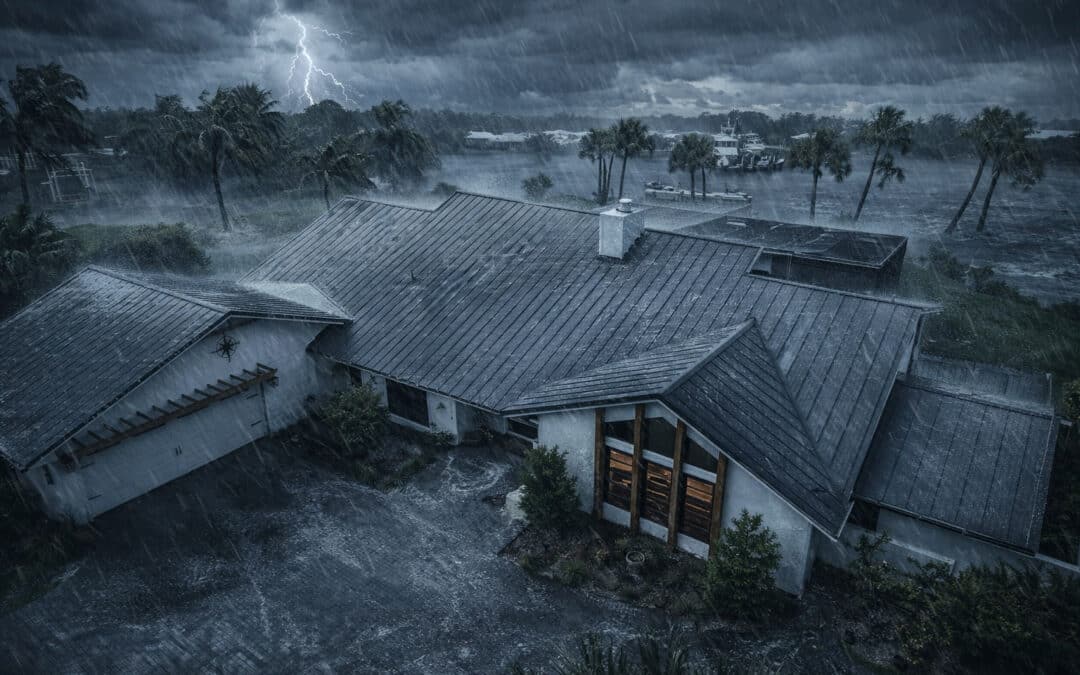
If your roof could talk after spending August in Port St. Lucie, it would probably have a few complaints. Florida homeowners tend to think about roofs most during hurricanes, but dramatic storms are only one part of the environment a roofing system has to handle. The quieter challenge happens every day. Morning sunshine begins heating the roof. Temperatures climb. Clouds build. An afternoon storm sends heavy rain across the property. Humidity remains high. The next morning, the cycle starts again. Over months and years, those conditions matter. Understanding how Florida’s climate interacts with a roofing system can help homeowners recognize why maintenance, timely repairs and proper installation are so important.
The Roof Is Usually the Hottest Part of the Conversation
Stand outside a Port St. Lucie home on a bright summer afternoon and think about which exterior surface receives the most direct solar exposure.
For many houses, it is the roof.
Roofing materials are designed for exterior exposure, but that doesn’t mean sunlight has no effect on them.
Ultraviolet radiation and heat contribute to the natural aging of many materials. The roof also experiences temperature changes as conditions shift between hot daylight hours, cloudy periods, rain and nighttime.
The important point isn’t that sunshine instantly damages a good roof.
It is that roofing systems operate in an environment where exposure is constant.
Material quality and proper installation therefore matter over the long term.
Then the Afternoon Storm Arrives
Anyone who has spent a summer in South Florida knows the experience.
The sky can go from bright to dark remarkably quickly.
When heavy rain arrives, your roof changes jobs.
Instead of primarily dealing with sun and heat, it now needs to manage a large volume of water and direct that water away from vulnerable areas.
This is where details become important.
The broad surface of a roof gets most of the visual attention, but water management becomes especially interesting around transitions, valleys, penetrations, walls and edges.
Water follows gravity, but wind can complicate how rainfall interacts with a building.
A roof therefore isn’t simply a waterproof lid placed on top of a house. It is an interconnected system designed to manage exposure.
Why a Tiny Weakness Can Stay Hidden Until the Right Storm
Homeowners are sometimes confused by a roof that leaks only occasionally.
“If the roof has a problem,” they ask, “why doesn’t it leak every time it rains?”
Because rainstorms aren’t identical.
Rainfall intensity changes. Wind direction changes. The amount of water moving through a particular roof area changes.
A vulnerability that remains unnoticed during a light shower may become apparent during wind-driven rain from a certain direction.
That is one reason intermittent leaks deserve investigation.
The fact that the ceiling dried after the storm doesn’t mean the exterior problem repaired itself.
Humidity Is the Background Character That Never Leaves
Florida humidity is so normal that homeowners barely notice it until they travel somewhere dry.
Buildings notice it.
Moisture management matters in warm, humid climates, and roofing is part of a larger building system.
This is another reason homeowners shouldn’t reduce roofing decisions to a single visible product.
The way the roof interacts with the rest of the building matters.
If you are replacing a roof, ask questions about the complete proposed system rather than selecting material based solely on color, marketing language or price.
Wind Changes the Equation
Wind is a normal part of weather, not merely a hurricane concern.
Roof edges and other areas can experience forces that aren’t obvious to someone standing inside the house.
During severe weather, those forces become more significant.
That doesn’t mean homeowners should expect their roofing systems to fail whenever wind increases. Roofing systems are designed and installed according to requirements appropriate to their applications.
But it explains why attachment and installation details matter.
The visible roof covering cannot be evaluated independently from the way the system is installed.
Why Hurricanes Get Attention—but Ordinary Weather Still Matters
Hurricanes are memorable.
Daily exposure isn’t.
Yet a roof may spend many years handling ordinary Florida conditions between major tropical events.
Repeated sunshine, heat, rainfall and seasonal weather contribute to the environment in which roofing materials age.
This distinction is useful because homeowners sometimes assume that if their roof has never experienced obvious hurricane damage, it must be in excellent condition.
That isn’t necessarily true.
Roofs can develop ordinary age- and exposure-related problems without one dramatic event.
Shingles and Florida Weather
Asphalt shingles are common on homes throughout Port St. Lucie and the Treasure Coast.
They are manufactured as exterior roofing materials, but like all roofing products, they need to be properly selected and installed.
Over time, homeowners may notice visible changes in an aging shingle roof.
Not every visual change means immediate replacement is necessary.
The question is whether those changes are cosmetic, localized or part of broader deterioration affecting the roofing system’s ability to perform.
A professional evaluation can help make that distinction.
Metal Roofing and Florida Weather
Metal roofing is increasingly attractive to homeowners interested in durability and appearance.
But “metal roof” describes a category, not one universal product.
Metal type, finish, profile, attachment and environmental exposure can all matter.
For properties influenced by coastal conditions, product selection deserves additional attention.
A homeowner should ask whether the exact proposed metal roofing system is appropriate for the property’s location rather than relying on a general statement that metal is good in Florida.
Why Installation Matters More Than Marketing
Roofing advertising often focuses on the material.
Homeowners see beautiful shingles, metal panels and impressive product descriptions.
But a roofing system includes details most people will never show off in a photograph.
Water does not care how attractive a roof looks from the street.
The system needs to manage transitions, penetrations, edges and other details correctly.
That is why choosing a roof based solely on the visible product misses a major part of the decision.
How Homeowners Can Respond to Florida’s Climate
You do not need to become a roofing expert or climb onto your house every few months.
In fact, homeowners should avoid putting themselves at risk by walking on roofs without appropriate training and equipment.
Instead, become observant.
Notice changes from the ground.
Pay attention to ceilings and walls after significant weather.
If a stain appears, don’t wait through a year of storms hoping it disappears permanently.
Keep records when roofing work is performed.
And when replacement becomes necessary, select the complete system—not simply the prettiest visible material.
Your Roof Is Aging Even When Nothing Dramatic Happens
One of the biggest misconceptions about roofing is that failure must follow a dramatic event.
Sometimes it does.
A storm can cause obvious damage.
But other roofing systems simply change gradually over years of service.
The homeowner may not notice anything until the first leak.
That is why the history of a roof matters. Previous repairs, known problems and general condition provide context when deciding whether another repair makes sense.
Florida Roofing Is About Managing an Environment
There is no roofing material that makes Florida weather irrelevant.
There is also no reason to assume Florida conditions make good roofing impossible.
The practical approach lies between those extremes.
Choose appropriate materials. Pay attention to installation. Address known problems. Understand that the roof functions as a complete system.
For Port St. Lucie homeowners, those principles matter far more than dramatic marketing claims.
Alliance Group Roofing Company provides roof repair, roof replacement and metal roofing services in Port St. Lucie and surrounding Treasure Coast communities.
If Florida weather has exposed a problem with your roofing system, contact Alliance Group Roofing Company to have the situation evaluated and discuss the appropriate next step.