
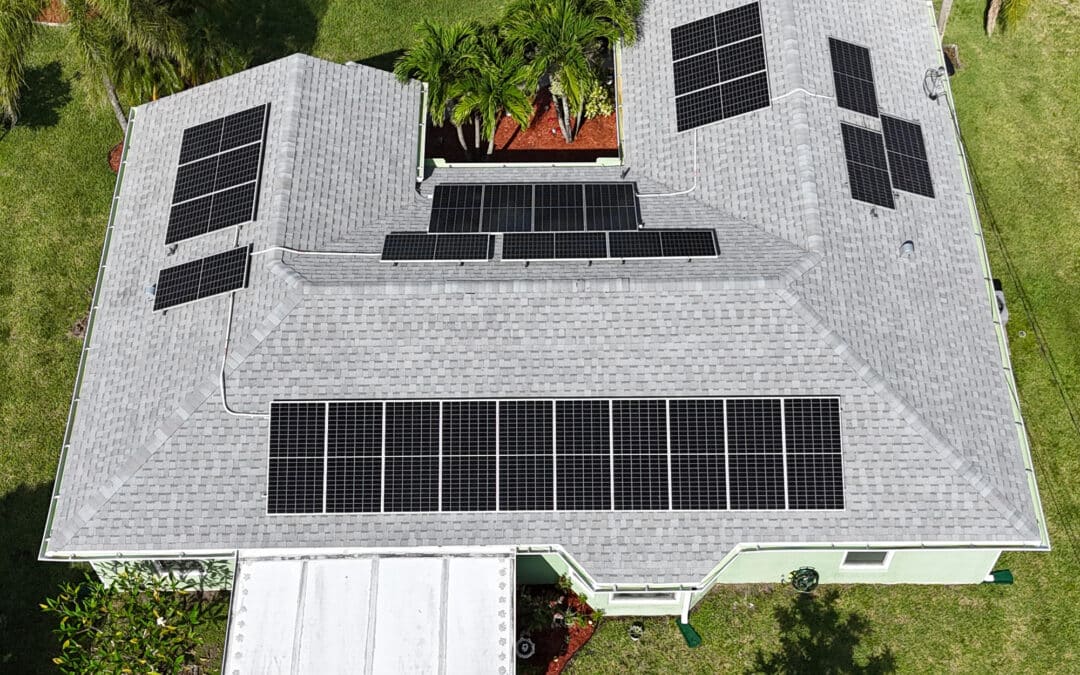
The Roofing Question to Ask Before You Go Solar
You’ve been thinking about solar panels for your Port St. Lucie home. Maybe you want to generate some of your own electricity, or perhaps you’ve started comparing solar proposals and are excited about the idea of putting your sunny Florida roof to work.
Then someone asks a question you hadn’t considered:
How much life does your current roof have left?
It’s an important question because solar panels and roofing systems have different jobs, but they occupy the same space. Once panels are installed, accessing the roof beneath them may become more complicated. If you discover a few years later that your roof needs replacement, the roofing project may also require coordination with a solar contractor to remove and reinstall the panels.
That doesn’t mean every homeowner needs a new roof before installing solar. It means the roof deserves its own evaluation before you commit to a project that will make future roofing work more involved.
For homeowners in Port St. Lucie and throughout the Treasure Coast, planning the two projects together can help avoid surprises.
Solar Panels Don’t Fix an Aging Roof
A solar installation can make a home look more modern, but it doesn’t restore the roofing system underneath it.
If your shingles are deteriorating, panels won’t reverse that deterioration. If the roof has an unresolved leak, installing equipment above it won’t identify or correct the source. And if the roof is already approaching the point where replacement makes sense, covering part of it with solar panels doesn’t eliminate that future expense.
Before focusing on solar equipment, start with the condition of the roof itself.
Has it leaked recently? Have you needed several repairs? Are there visible signs of deterioration? Do you know when the roof was installed and whether any major roofing work has been completed since then?
You don’t need to diagnose the roof yourself. The purpose of those questions is to identify what a roofing professional should investigate before the solar project moves forward.
Why Roof Age Alone Doesn’t Give You the Answer
Homeowners often approach this decision with a simple calculation.
“My roof is twelve years old. Is that too old for solar?”
There isn’t one age that answers the question for every home.
Two roofs installed in the same year can have different conditions. Roofing materials, installation details, roof design, maintenance, previous repairs and weather exposure can all influence how a system performs over time.
A relatively newer roof might have an issue that should be corrected before solar installation. An older roof might still be serviceable.
What matters is whether the existing roofing system is in suitable condition for the planned work and whether replacement is reasonably foreseeable.
That is why a roof evaluation is more useful than relying on the installation date alone.
The Cost Homeowners Sometimes Forget: Removing and Reinstalling Panels
Imagine installing solar panels this year and replacing your roof three years from now.
The roof replacement itself is one project. But the panels may need to be removed before roofing work begins and reinstalled afterward.
That introduces another contractor, another scope of work and additional scheduling considerations. Depending on the solar system and agreements involved, there may also be requirements concerning who can handle the equipment and how the system is disconnected and recommissioned.
Those details should be clarified with the solar provider before installation.
If the roof already needs replacement, completing the roofing project first may avoid paying for panel removal and reinstallation solely to access the roof a short time later.
On the other hand, replacing a serviceable roof prematurely can also be an unnecessary expense. The point is to compare the actual condition of your roof with your plans for the solar system—not to assume that every solar project requires a new roof.
What a Roofer Should Evaluate Before Solar Installation
A roof evaluation before solar should consider more than the area where panels are expected to sit.
The roofing contractor may examine the visible roof covering, flashing, roof transitions, penetrations, previous repair areas and other components relevant to the particular property.
If there has been an interior leak, its source should be investigated rather than assuming it will be harmless once panels are installed.
The contractor should also consider the roof as a whole. A solar array might occupy one slope, but deterioration on another slope could still lead to a replacement project that affects scheduling and costs.
Some conditions beneath the existing roof covering cannot be fully observed without removing materials. If a roof replacement is planned, ask how unexpected decking conditions would be handled once the old roofing is removed.
A roofing evaluation does not replace the solar installer’s structural and electrical assessments. Each professional needs to address the parts of the project within their expertise.
Shingle Roofs and Solar Panels
Many Port St. Lucie homeowners have asphalt shingle roofs, so it’s natural to wonder whether shingles and solar panels are compatible.
Solar systems can be installed on suitable shingle roofs, but the details matter. The mounting system, attachment locations and methods used to manage water around roof penetrations should be appropriate for the roof and solar equipment.
This is one reason the roofing and solar contractors should communicate before installation.
If your shingle roof is already showing widespread deterioration, installing solar without addressing that condition could make an eventual replacement more complicated.
If the roof is in good condition, the discussion may instead focus on protecting the existing roofing system during installation and understanding how future repairs would be handled.
Ask the solar contractor how its installation methods interact with the roof and what happens if a leak later develops near a mounting location.
What About Metal Roofing and Solar Panels?
Homeowners planning a new roof before going solar often ask whether they should switch from shingles to metal.
Metal roofing can be an option for homes with solar panels, but “metal roof” describes a broad category of products and systems. Panel profiles, attachment methods and installation requirements differ.
Certain solar mounting approaches are designed for particular metal roof profiles. Other configurations may require different attachment details.
The roofing and solar contractors should confirm that the proposed products and installation methods are compatible rather than assuming that every solar system works the same way on every metal roof.
If you are already considering metal roofing for your Port St. Lucie home, discuss the solar plan before selecting the roofing system. Coordinating those decisions early is easier than discovering an incompatibility after the roof has been installed.
Florida Weather Makes Coordination Especially Important
A roof in Port St. Lucie must manage heavy rainfall, strong sunshine and periods of severe weather. Adding solar equipment introduces another system that must be properly integrated with the building.
That does not mean solar panels automatically make a roof unsafe or prone to leaks. It means installation details matter.
Roof attachments and penetrations must be addressed appropriately. The solar equipment and its mounting system must be evaluated for the applicable project requirements. The roof beneath the array must remain capable of performing its weather-protection role.
Homeowners should be cautious of sweeping claims such as “solar panels protect your roof from hurricanes” or “installing solar will never affect your roof.”
Neither statement is a substitute for project-specific design and installation information.
Who Is Responsible if a Leak Appears After Solar Installation?
This is a question worth asking before signing a solar contract.
Suppose you install panels and notice a ceiling stain several months later. The source could involve a solar attachment, an unrelated roofing issue or another building component entirely.
The first step is diagnosis.
The next step is understanding which company is responsible for the relevant work under its contract and applicable warranty terms.
Ask the solar provider how roofing concerns are handled after installation. If the roofing contractor is performing work before the panels go on, ask how that company’s warranty applies when another contractor later works on the roof.
Get the answers in writing.
Clear responsibilities are particularly valuable when two companies will be working on the same part of your home.
Should You Replace Only the Roof Area Beneath the Panels?
It may sound like an economical compromise: replace the slope that will hold the solar panels and leave the rest of the roof alone.
Whether that approach makes sense depends on the roof’s design, condition and the scope of the proposed work.
Roof slopes are not always independent systems. Valleys, ridges, transitions and other details can connect one section to another. A partial replacement may also create differences in material appearance and future maintenance timing.
Before deciding, ask a roofing contractor to explain how the proposed partial project would integrate with the remaining roof.
You should understand whether you are solving a clearly defined problem or simply postponing work that is already likely to be needed elsewhere.
What if You Already Have Solar Panels and Need Roof Repair?
Finding a leak after solar installation can be frustrating, especially if the affected area is beneath or near the panels.
Do not assume the panels caused it.
A roofing contractor should investigate the likely source of water intrusion. Depending on the location and type of repair, access may require coordination with the solar company.
Avoid attempting to move or disconnect solar equipment yourself. Solar systems involve electrical components, and work on a roof creates fall hazards.
Before any work begins, confirm who will handle panel removal if necessary, how the system will be protected during roofing work and who will reinstall and check the equipment afterward.
Planning a Roof Replacement Around a Solar Project
If you have decided that both projects are necessary, the order of work matters.
Start by having the existing roof evaluated and determining the appropriate roofing scope. Then share your solar plans with the roofing contractor and your roofing plans with the solar provider.
Discuss the roof material and proposed solar mounting method before either project is finalized.
Make sure the companies understand each other’s schedules and responsibilities. Ask what documentation you will receive for the roofing and solar work, and clarify how any future service needs will be handled.
You should also confirm applicable permitting and approval requirements with the appropriate local authorities and project professionals rather than assuming one contractor’s permit covers everything the other contractor intends to do.
The goal is a coordinated project—not two separate installations that happen to occupy the same roof.
Don’t Let a Solar Sales Timeline Decide Your Roofing Timeline
A solar proposal may come with an attractive offer or a suggested installation date.
That timeline should not prevent you from understanding the condition of your roof.
If you have an active leak or reason to believe replacement is approaching, address the roofing question before committing to an installation schedule.
You can be enthusiastic about solar and still take time to evaluate the surface that will support the equipment.
A little coordination at the beginning may save a great deal of inconvenience later.
Questions to Ask Before Signing Either Contract
You don’t need to become an expert in solar mounting systems or roofing assemblies. You do need clear answers from the companies involved.
Ask the roofer whether the existing roof is suitable to remain in place for the planned project and what conditions, if any, should be addressed first.
Ask the solar provider how the equipment will attach to your specific roof, who is responsible for roof-related problems associated with its work and what the process would be if the roof needs repair or replacement later.
If you are considering a new metal roof, ask both contractors to confirm that the roofing profile and solar mounting system are compatible.
And if either company makes a promise about future costs, warranties or performance, request the relevant terms in writing.
The Best Time to Coordinate Roofing and Solar Is Before Either Project Starts
Solar panels can be a significant addition to a Port St. Lucie home. A roof replacement is a significant project too.
When both are on the horizon, treating them as connected decisions can help you choose suitable materials, understand installation requirements and avoid unnecessary scheduling conflicts.
The key is not to replace every roof before solar installation. It is to make sure you know the roof’s condition and have a practical plan for the years ahead.
A serviceable roof may be ready for the project. A roof with recurring leaks or widespread deterioration may need attention first.
Finding out now is easier than finding out after the panels are installed.