
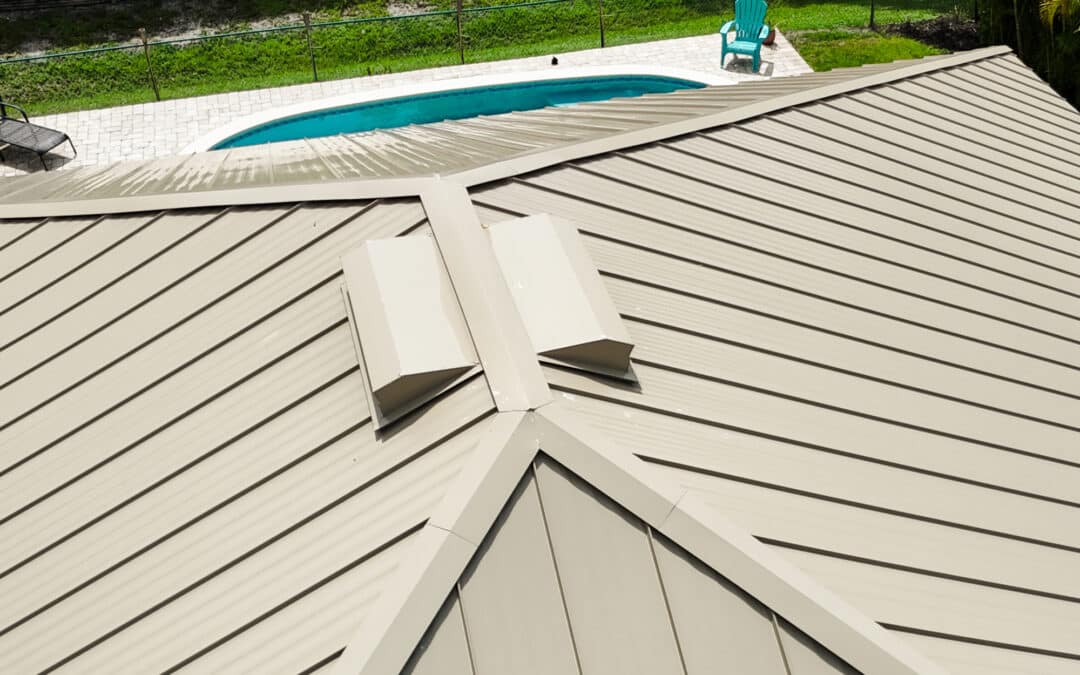
Walk into an attic in Port St. Lucie on a sunny summer afternoon and one thing becomes obvious very quickly:
It is hot.
Really hot.
For homeowners, that often leads to a simple question.
Is my roof making my attic hot?
The answer is more complicated than yes or no.
Your roof is part of a larger building system. Roofing material, ventilation, insulation, air sealing, roof color, attic configuration and Florida’s intense sunshine can all influence what happens between the ceiling and the roof.
Understanding that relationship is particularly useful when you’re planning a roof replacement because it gives you an opportunity to think beyond the shingles or metal panels you see from the street.
A new roof isn’t simply about choosing a color.
It is an opportunity to understand how the entire roof assembly works with your home.
Why Florida Attics Get So Hot
Start with the obvious culprit: the sun.
Port St. Lucie receives intense solar exposure, and the roof is often one of the largest surfaces directly exposed to that sunshine.
As roofing materials absorb solar energy, the roof surface becomes hot.
Some of that heat can influence the materials and spaces below.
Now add Florida’s naturally warm outdoor temperatures.
Your attic is sitting beneath a sun-exposed roof while outside air is already hot and humid.
It isn’t surprising that attic temperatures can climb.
The question isn’t whether an attic will become warm.
The more useful question is whether the home’s roof, ventilation, insulation and air-sealing strategy are working together appropriately.
Your Roof and Your Attic Aren’t Separate Worlds
Homeowners tend to think about the house in pieces.
The roof belongs to the roofer.
The attic is just empty space.
Insulation belongs to someone else.
The air conditioner is an HVAC issue.
In reality, these systems interact.
The roof is the home’s exterior weather barrier.
Below it is the attic or another roof assembly.
Below that is the conditioned living space.
Heat, moisture and air movement don’t necessarily respect the boundaries between the contractors who work on different parts of the house.
That is why roofing decisions can sometimes raise questions about ventilation and attic conditions.
What Does Roof Ventilation Actually Do?
Roof and attic ventilation is often misunderstood.
Some homeowners think vents are installed simply to “let hot air out.”
That description captures part of the idea but oversimplifies how a properly designed system works.
Ventilation strategies vary depending on the house and roof design. A system may involve intake and exhaust components intended to promote appropriate airflow through an attic space.
The important word is system.
Adding random vents to a roof is not automatically an improvement.
Ventilation components need to make sense for the building.
That’s why homeowners should be cautious about treating ventilation as a DIY numbers game.
More holes in a roof do not automatically equal better ventilation.
Why Intake Matters
Imagine trying to drink through a straw while completely sealing the other end of the container.
Air movement needs a pathway.
In attic ventilation discussions, homeowners often focus heavily on exhaust because that’s the visible place where warm air can leave.
But an overall ventilation strategy also has to consider where replacement air comes from.
If you’re replacing a roof, ask how the existing attic is ventilated and whether the proposed roofing project changes anything about that system.
You don’t have to design the ventilation yourself.
You should understand what is being proposed.
Why Adding More Vents Isn’t Always the Answer
This is one of the biggest misconceptions in residential roofing.
The attic feels hot, so the homeowner concludes:
“We need more roof vents.”
Maybe.
But the attic temperature alone doesn’t tell you exactly what needs to change.
Ventilation configuration matters.
Insulation matters.
Air sealing matters.
The design of the roof matters.
Other building systems can matter.
Before altering a ventilation system, the house should be evaluated appropriately rather than assuming that adding another vent will solve every heat-related concern.
Insulation and Ventilation Do Different Jobs
These two concepts are often blended together.
They shouldn’t be.
Ventilation relates to airflow through appropriate parts of the roof or attic assembly.
Insulation helps resist heat transfer between areas of the building.
They interact, but they are not interchangeable.
A homeowner can have insulation and still need an appropriate ventilation strategy for a vented attic.
Likewise, simply adding ventilation doesn’t replace the role of insulation.
When homeowners complain about rooms being unusually hot, the roofing system may be part of the conversation, but it shouldn’t automatically be blamed for every comfort problem.
What Does Your Air Conditioner Have to Do With It?
Florida homeowners understandably connect high electric bills and uncomfortable rooms with the roof.
Sometimes roofing or attic conditions may contribute to the broader building-performance picture.
But your home’s cooling performance involves many variables.
HVAC equipment, ductwork, insulation, windows, air leakage, thermostat settings, home design and occupant behavior can all influence comfort and energy use.
A roofing contractor can explain roofing-related conditions.
For questions involving HVAC performance or whole-home energy efficiency, the appropriate qualified professionals may need to evaluate those systems.
That distinction protects homeowners from overly simplistic promises.
Be Careful With “This Roof Will Cut Your Electric Bill” Claims
Energy savings are attractive.
Everybody in Florida would like a lower cooling bill.
But homeowners should be skeptical of anyone promising a specific reduction simply because they purchase a particular roofing material.
Real houses are complicated.
A roofing product can have thermal characteristics that are relevant to the building, but the effect on your actual utility bill depends on far more than the visible roof covering.
If energy performance is important to your roof replacement decision, ask for product-specific information and evaluate the entire building rather than relying on a dramatic sales claim.
Does Roof Color Matter in Florida?
Color can affect how roofing surfaces interact with solar energy, but homeowners shouldn’t turn this into a simplistic “light roof good, dark roof bad” rule.
Different roofing products have different characteristics.
The complete roof and building assembly matters.
Appearance matters too.
You’re going to look at the roof every day.
If you’re considering a particular shingle or metal color partly for energy reasons, ask for information specific to the actual product instead of relying on assumptions based solely on appearance.
Shingle Roofs and Attic Heat
Asphalt shingles are common throughout Port St. Lucie.
During a roof replacement, homeowners usually spend most of their time selecting shingle style and color.
Those decisions matter aesthetically.
But the project is also an opportunity to ask about what is happening underneath.
How is the attic currently ventilated?
What ventilation components exist?
Are there any obvious issues with the current configuration?
How will the replacement roofing system integrate with those components?
These questions help turn a shingle replacement from a surface-level purchase into a better understanding of the entire roof.
What About Metal Roofing?
Metal roofing attracts considerable interest in South Florida, and homeowners often ask whether metal makes a house cooler.
There isn’t one universal answer that applies to every metal roof and every home.
Metal roofing systems vary.
Colors and finishes vary.
Roof assemblies vary.
Attic configurations vary.
Insulation varies.
If you’re considering metal roofing partly because of thermal performance, ask about the exact system being proposed.
Don’t assume that simply replacing shingles with any metal product automatically produces a specific indoor temperature or electric-bill reduction.
The Air Gap Question
Homeowners researching metal roofing online sometimes encounter discussions about air spaces and different installation assemblies.
This is an area where internet advice can become confusing quickly.
The correct roof assembly depends on the specific project, product and applicable installation requirements.
Rather than trying to design the system from online diagrams, ask the roofing contractor exactly how the proposed metal roof will be installed on your home.
The details matter more than generic statements about metal roofing.
Moisture Matters in Florida Too
Heat gets most of the attention because homeowners can feel it.
Moisture deserves attention as well.
Port St. Lucie has a warm, humid climate.
Building assemblies therefore need to manage both heat and moisture appropriately.
This is another reason homeowners should be cautious about making random changes to attic ventilation without understanding how the building works.
An attic is not simply a hot box that needs as many openings as possible.
It is part of a building system.
Signs That Make Homeowners Start Asking About Ventilation
Often the conversation begins because something feels unusual.
One upstairs room may be much warmer than another.
The homeowner may notice the attic feels extremely hot.
They may see something in the attic that raises a moisture concern.
Or they may simply be replacing the roof and realize they have never thought about ventilation before.
None of these observations automatically identifies a specific roofing defect.
They are reasons to ask questions.
That’s an important distinction.
Roof Replacement Is a Great Time to Ask Those Questions
If your existing roof is being removed anyway, this is the natural time to understand the ventilation components associated with the roof.
Ask your contractor what currently exists.
Ask what will remain.
Ask what will change.
Ask whether the proposed roofing system has particular ventilation requirements.
Ask whether another type of professional should evaluate insulation, HVAC or other building-performance concerns separately.
These conversations are much easier before construction begins.
Don’t Block Ventilation Accidentally
A ventilation system only works as intended when its pathways remain appropriate.
Changes made elsewhere in the attic can potentially affect those pathways.
This is one reason homeowners should think about roofing, insulation and attic work as related projects rather than completely independent ones.
If you’re planning insulation work around the same time as roof replacement, make sure the professionals involved understand what other work is being performed.
Communication can prevent one improvement from interfering with another.
Why Two Neighboring Houses Can Feel Completely Different
Imagine two nearly identical homes on the same Port St. Lucie street.
Both receive the same afternoon sunshine.
Both have similar-looking roofs.
Yet one homeowner complains constantly about hot rooms while the other doesn’t.
The roof covering may not explain the difference.
One house may have different insulation.
The duct systems may differ.
Air leakage may differ.
Ventilation may differ.
Interior temperatures and thermostat settings may differ.
Even landscaping and solar exposure can differ.
This illustrates why homeowners should avoid diagnosing whole-home comfort problems based on the roof alone.
Can Poor Ventilation Damage a Roof?
This is where homeowners should avoid broad internet generalizations.
Different roofing systems and attic designs have specific requirements and performance considerations.
Rather than assuming that every roofing problem is caused by ventilation—or that every hot attic is damaging the roof—have the actual conditions evaluated.
If you’re replacing the roof, follow the requirements applicable to the roofing system and building configuration.
Specific information beats generic roofing folklore.
What Should You Ask a Roofer Before Replacement?
You don’t need a twenty-question checklist.
Start with a conversation.
Ask:
“How is my attic currently ventilated?”
Then:
“Does anything change with the new roof?”
If you’re considering both shingles and metal, ask whether the proposed roof assemblies differ.
If the contractor identifies a concern outside the roofing scope, ask what type of professional should evaluate it.
Those few questions can uncover much more useful information than simply asking how many vents you’re getting.
The Cheapest Roofing Estimate May Handle Ventilation Differently
This is another reason roofing estimates shouldn’t be compared only by total price.
Suppose three Port St. Lucie roofing contractors provide replacement proposals.
All three quote the same general roofing material.
But one proposal addresses existing roof ventilation components clearly, another proposes changes, and the third barely mentions ventilation at all.
Those aren’t necessarily identical projects.
Ask each contractor what their proposal includes and why.
The goal isn’t to choose whichever estimate contains the most components.
It is to understand what each contractor intends to do.
Don’t Turn Your Roof Into a DIY Experiment
There are plenty of home improvements a handy homeowner can tackle.
Roof and attic ventilation deserves caution.
Working on a roof creates fall hazards, and altering roof components incorrectly can create water-management problems.
There are also building-science considerations that aren’t obvious from watching a short online video.
If you have a ventilation concern, start with evaluation rather than cutting new openings into the roof.
What If Your Attic Is Extremely Hot Right Now?
Don’t panic simply because an attic is hotter than your living space.
Attics can experience high temperatures.
Instead, focus on why you’re concerned.
Are living areas uncomfortable?
Have you discovered signs of moisture?
Are you replacing the roof?
Has someone identified a ventilation issue?
Are there problems with existing vents?
The specific concern determines which professional should evaluate the situation.
A roofing contractor can address roofing and roof-ventilation components within the project’s scope.
Other concerns may require HVAC, insulation or building-performance expertise.
A New Roof Is an Opportunity to Think About the Whole System
Most homeowners begin roof replacement by thinking about what they can see.
Gray shingles or brown?
Standing-seam appearance or another metal profile?
What will look best with the paint?
Those decisions are enjoyable and important.
But some of the most meaningful roofing questions concern parts of the system you’ll barely notice after the project is finished.
Ventilation is one of them.
A properly planned roofing project should consider how the visible roof covering works with the components around and beneath it.